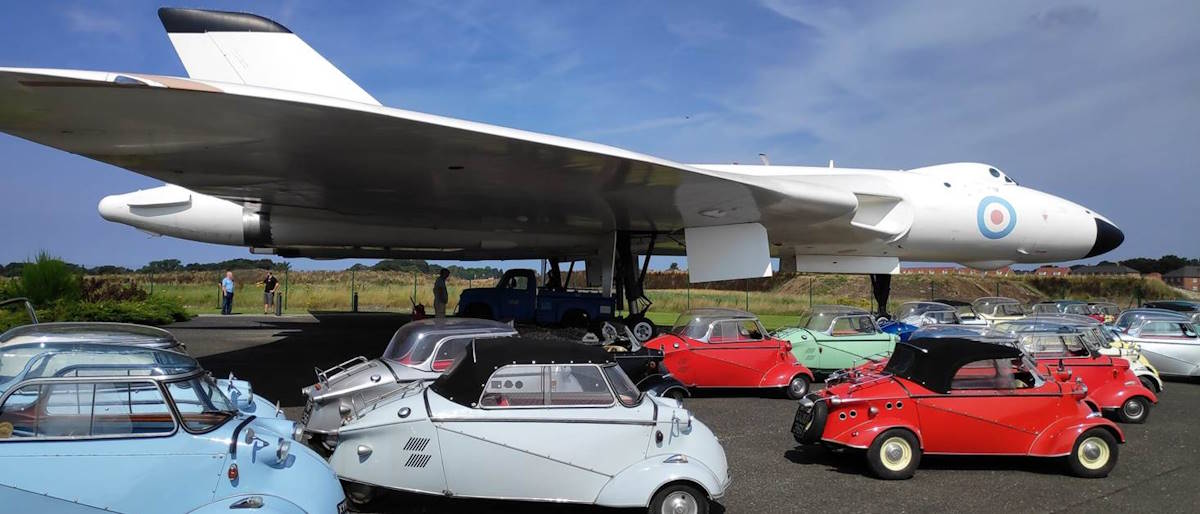
Welcome to the Messerschmitt Owners’ Club
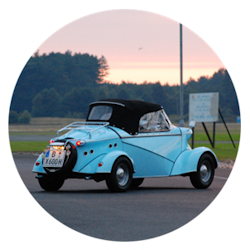
The Messerschmitt Owners’ Club has an unbroken history stretching back to 1956, in the days when our members were able to buy new Messerschmitts and use them as daily transport.
Formed largely for social purposes around regular meets and a magazine, the club’s ethos gradually changed after the cars went out of production in 1964, when the supply of spare parts started to become a problem.
Today the club has members from all over the world and continues to produce the club’s magazine Kabinews. Most parts are available to restore your Messerschmitt through the club’s Partsmart parts department, which offers a worldwide delivery service. Click on the Parts link above to view what is available.
In 2005 the MOC became MOC Ltd, a company whose liabilities are limited by guarantee. The club currently has five directors, but there is no limit to this number. The club holds an Annual General Meeting at which all full members are able to attend either in person or via Zoom and can vote on the directors standing for election. In addition there are two members’ consultation meetings during the year, one held after the AGM and the other later in the year.
The club’s annual rally attracts members, not just from the UK, but also from overseas and is a great social occasion with drives out to places of interest, second hand parts sales, a dinner, parts auction and concours judging amongst other activities.



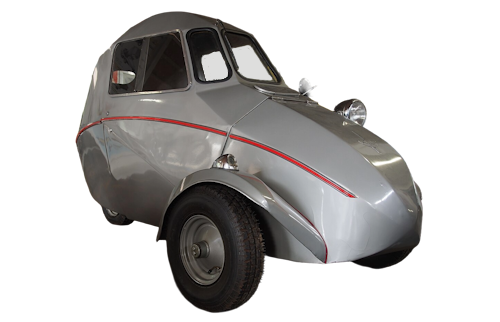
Fend Flitzer 100 (1949)
Body: steel frame with aluminium panels
Engine: 98cc Fichtel & Sachs air cooled two stroke single cylinder
2.5 HP
Gears: 2
38mph
Approximately 98 produced.
Fritz Fend’s early design for an invalid carriage evolved to provide transport for able bodied people.
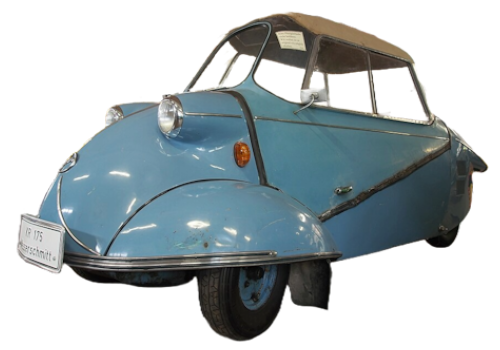
Messerschmitt KR175 (1953)
Body: steel tubular frame with steel panels
Engine: 175cc Fichtel & Sachs air cooled two stroke single cylinder
9 HP
Gears: 4
56mph
Approximately 9000 produced.
Fend’s next design saw production move to the Messerschmitt factory at Regensburg, with the requirement for the cars to carry this esteemed name.
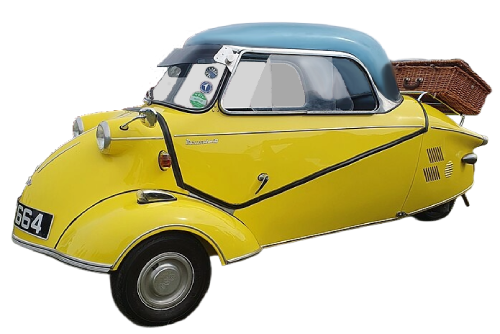
Messerschmitt KR200 (1955)
Body: steel tubular frame with steel panels
Engine: 191cc Fichtel & Sachs air cooled two stroke single cylinder
9.7 HP
Gears: 4
63mph
Approximately 14000 produced.
With increased competition and higher customer expectations Fend’s replacement for the KR175 saw the introduction of an overall improved design with increased power and bonded rubber suspension.
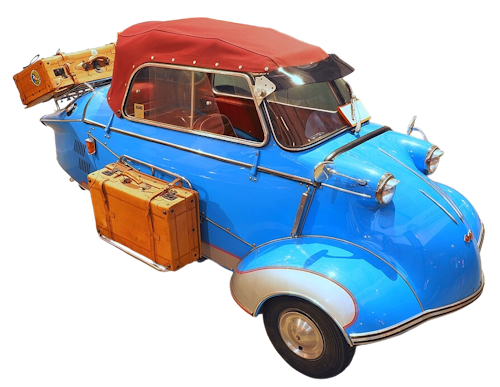
Messerschmitt KR200 Cabriolet (1955)
Body: steel tubular frame with steel panels
Engine: 191cc Fichtel & Sachs air cooled two stroke single cylinder
9.7 HP
Gears: 4
63mph
Approximately 10000 produced.
The cabriolet model addressed demand from customers in hot countries where the use of dome topped cars became extremely uncomfortable in the cabin, particularly when stationary.
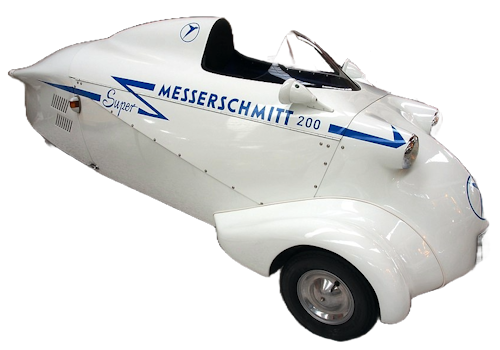
Messerschmitt 200 Super (record breaker) (1955)
Body: steel tubular frame with steel/aluminium panels
Engine: 191cc Fichtel & Sachs air cooled two stroke single cylinder
14 HP
Gears: 4
64mph
1 made.
To demonstrate his car’s durability Fend designed a streamlined version of the KR200. The Messerschmitt 200 established 25 long distance and period world records at the Hockenheim circuit on 29th-30th August 1955.
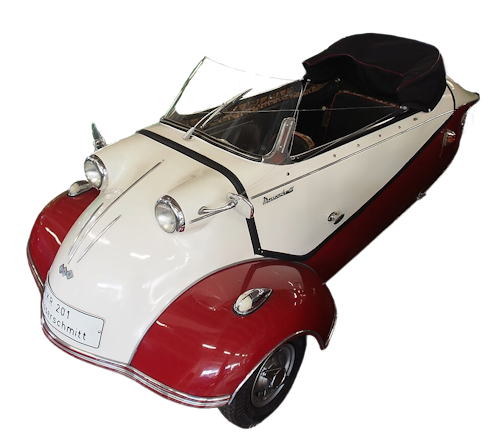
Messerschmitt KR201 (1957)
Body: steel tubular frame with steel panels
Engine: 191cc Fichtel & Sachs air cooled two stroke single cylinder
9.7 HP
Gears: 4
63mph
Approximately 400 produced.
A stylish derivative of the KR200, which due to its reduced practicality, did not sell in large numbers. The 201 is very sought after today, with some dome tops and cabriolets having been converted over the years, thus making it hard to determine a genuine example.
FMR TG500 ‘Tiger’ (1958)
 Body: steel tubular frame with steel panels
Engine: 494cc FMR air cooled two stroke twin cylinders
19.9 HP
Gears: 4
81mph
Approximately 300 produced.
With demand for more conventional cars increasing, Fend aimed to address this with the development of the four wheeled TG500. As FMR had taken over production from Messerschmitt in 1956 and this was a new car, it was badged an FMR. Originally intended to be badged the Tiger, this plan had to be dropped as the name was registered to Krupp, however, TG was used as an abbreviation and the car was widely referred to by enthusiasts as the Tiger regardless. An extremely desirable and rare model highly, regarded by enthusiasts.
Messerschmitt Sport (1959)
 The Body: steel tubular frame with steel panels
Engine: 191cc Fichtel & Sachs air cooled two stroke single cylinder
10.2 HP
Gears: 4
63mph
Unknown production numbers.
The rarest Messerschmitt derivative is a pared down version of the KR200 with no lifting top section and a welded side and therefore less expensive when bought new. Not popular due to its reduced practicality but highly sought after today and extremely rare, with only two or three genuine examples existing.
Messerschmitt People
 The enduring legacy of the Messerschmitt Owners’ Club was built by pioneers whose dedication saved these microcars for future generations. In this section of the website we would like to remember the life and legacy of a selection of these inspiring pioneers.
Read more